How Big Is 2 Inches? 6 Common Things That Are 2 Inches
2 inches, or 5.08 centimeters, is a concise yet amazingly common measurement frequently found right within your desk drawer, on your kitchen counter, or stashed inside your pocket. You probably interact with objects of this precise length plenty of times a day without ever bearing in mind their dimensions.
This guide examines six ordinary items that measure accurately 2 inches long, providing clear examples and pragmatic insights to help you imagine this measurement with ease.
How Long Is 2 Inches?
| Unit | Equivalent Of 2 Inches |
| Feet | 0.167 feet |
| Millimeters | 50.8 mm |
| Meters | 0.0508 m |
| Centimeters | 5.08 cm |
| Yards | 0.0556 yards |
A straightforward way to remember: a standard adult thumb is nearly two inches wide, providing a handy, built-in reference tool you consistently have on hand.
6 Common Things That Are 2 Inches Long
Large Binder Clip
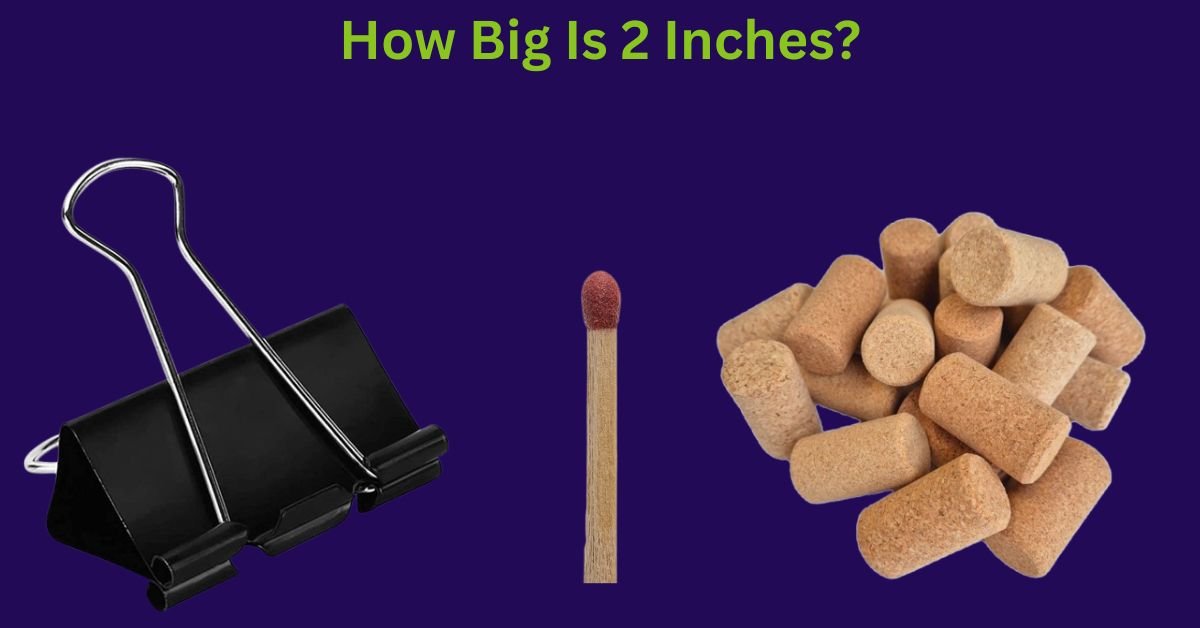
The customary large binder clip showcases a 2 inch jaw, the most common size carried by significant retailers like Staples, Office Depot, and Amazon. Primary manufacturers such as Avery and ACCO maintain this particular width of how long is 2 inches because it efficiently secures up to 100 pages while preserving tension and stopping warping.
Matchstick
A strike anyplace matchstick measures roughly 2 inches in length. This dimension, regulated by brands like Diamond Match and UCO, balances a robust handle for a steady strike with a snug design appropriate for standard packaging.
These matches are omnipresent, found in hardware stores and grocery chains throughout the world and function as a dependable reference of how big is 2 inches.
Wine Cork
Industry benchmarks dictate that a natural wine cork be about 2 inch long. This size is indispensable for generating an airtight seal within a 750ml wine bottle, making certain that the cork remains undamaged during both insertion and extraction. Many sommelier programs use this two inches length as a touchable reference of how long is 2 inches for wine enthusiasts.
Two U.S. Quarters
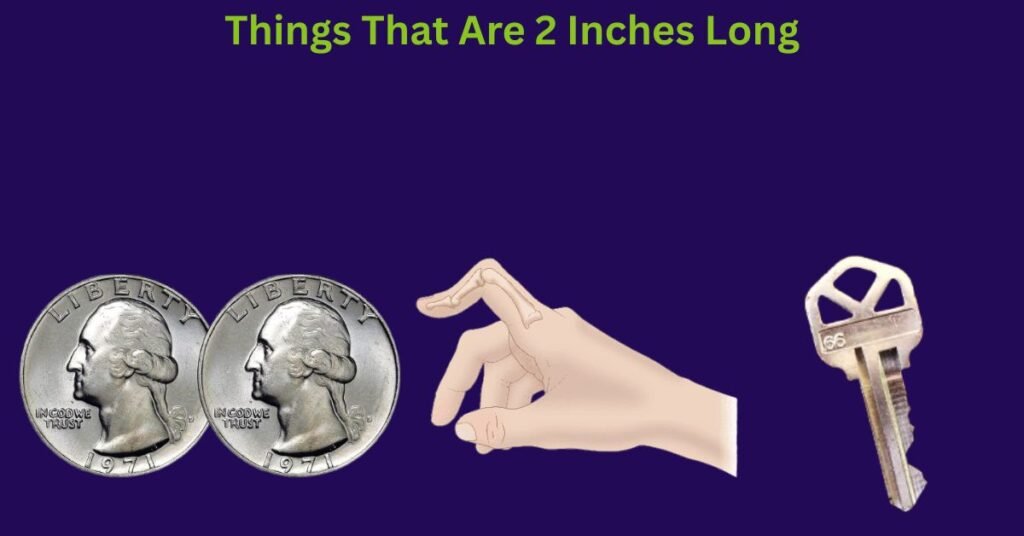
Placing two U.S. quarters side by side furnishes a total span of approximately 1.91 inches, functioning as a dependable pocket-sized reference. Because the U.S Mint has conserved the quarter’s diameter since 1965, this measurement has continued to be a consistent and trustworthy tool for more than fifty years.
Index Finger Top Joint
For the average adult, the extent from the fingertip to the first knuckle is nearly 2 inch. This serves as a convenient, always on hand measurement reference, regularly used by carpenters, tailors, and DIY fans to evaluate lengths rapidly in the field.
Standard Key
A standard house or car key generally measures between 1.9 and 2.1 inches from the shoulder to the tip, though some keys can also reach 3 inches. Brands like Kwikset and Schlage, as well as automotive producers like Ford and Toyota, stick to this range to ensure perfect engagement with pin tumbler locks while maintaining the key compact and mobile.
Where Does 2 Inches Appear In Daily Life?
Office and Desk: Large binder clips and massive paperclips are usually two inches wide, making this one of the most repeatedly handled dimensions in professional and home workspaces.
Kitchen and Household: Wine corks and customary matchsticks both measure two inches, incorporating this length into kitchen drawers, wine racks, and camping kits, often without us intentionally noticing.
Pocket and Everyday Carry: House keys, car keys, and two piled quarters all depend on the two inch measurement, meaning most people carry a few references to this dimension in their pockets all through the day.
Body Reference: Because the breadth of an adult thumb and the top joint of an index finger are both as much as 2 inch, this measurement is always accessible on your own hand, permitting swift estimations without the demand for tools.
Conclusion
Two inches quietly shapes everyday life, from the binder clip securing your documents and the cork sealing your wine to the key turning in your front door. Whether you are crafting, measuring, organizing, or simply exploring, understanding the scale of two inches provides a practical advantage in your daily routine.
FAQs
How Big is Two Inches?
2 inches is roughly equal to 5.08 centimeters or 0.167 feet.
What Does 2 Inches Look Like?
Many common objects like large binder clips, house keys, and two stacked quarters look like 2 inches.